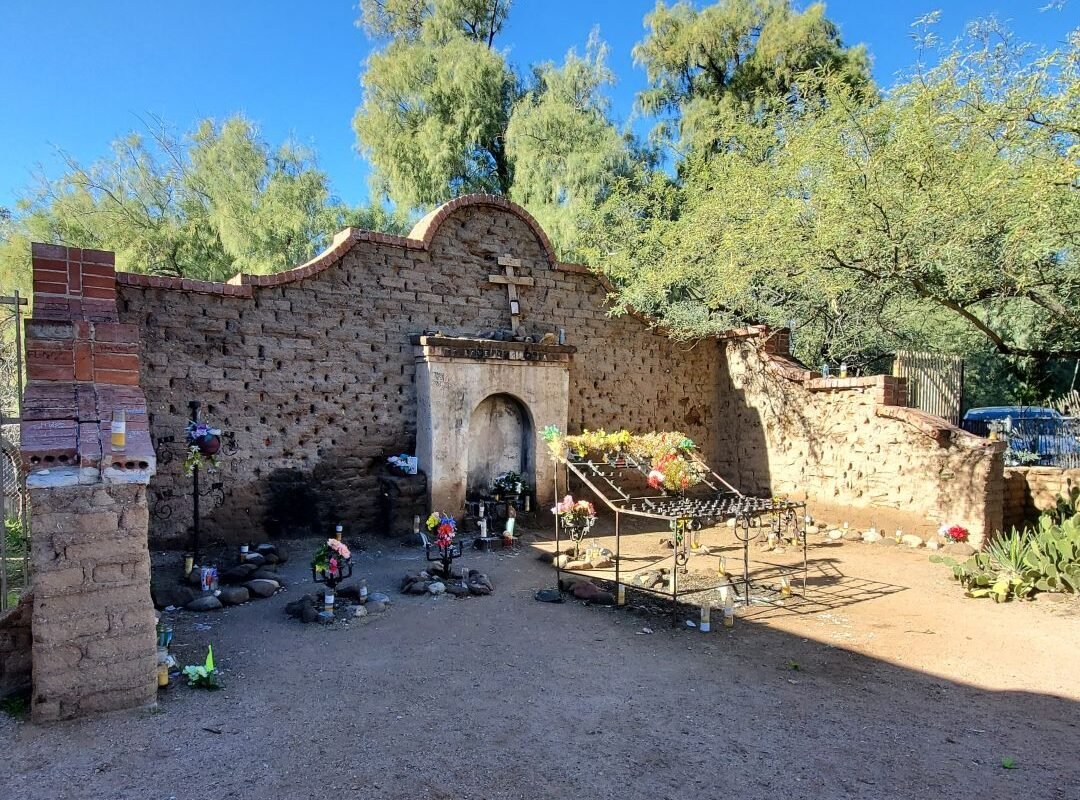
I was in Barrio Viejo to photograph a church and on my way home I stopped at El Tiradito, the Wishing Spot, located at 420 Main. Walking onto this charming folklore inspired historic monument, I noticed two big boxes of burned out glass candles by a garbage container. “Nice,” I thought. “The city must have sent someone to clean up after Dia de los Muertos before all the snowbirds arrive.”
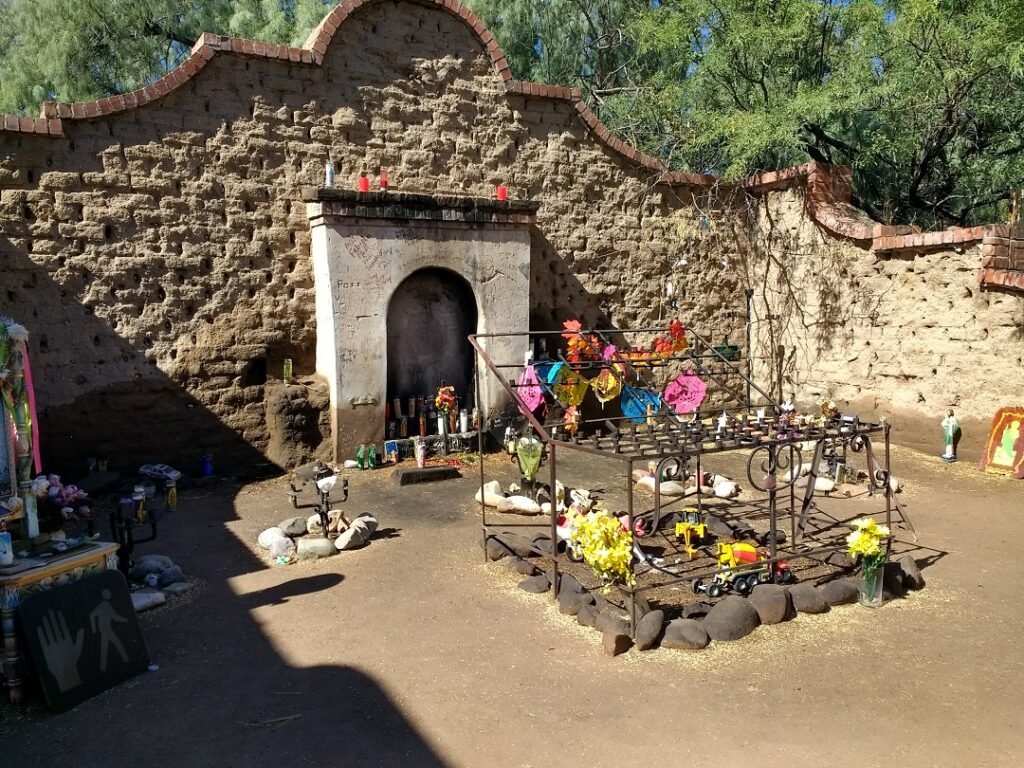
But then, I noticed big changes. No longer is it a place to bring a candle and a little toy replica or image of what you want to wish for, like a new front-loader or a cement truck. It’s too neat, too tidy. Now it has a definite religious feel. Notice the cross on top of the fireplace, on the right, in 2025. It wasn’t there in 2022, the last time I visited the site on the left.
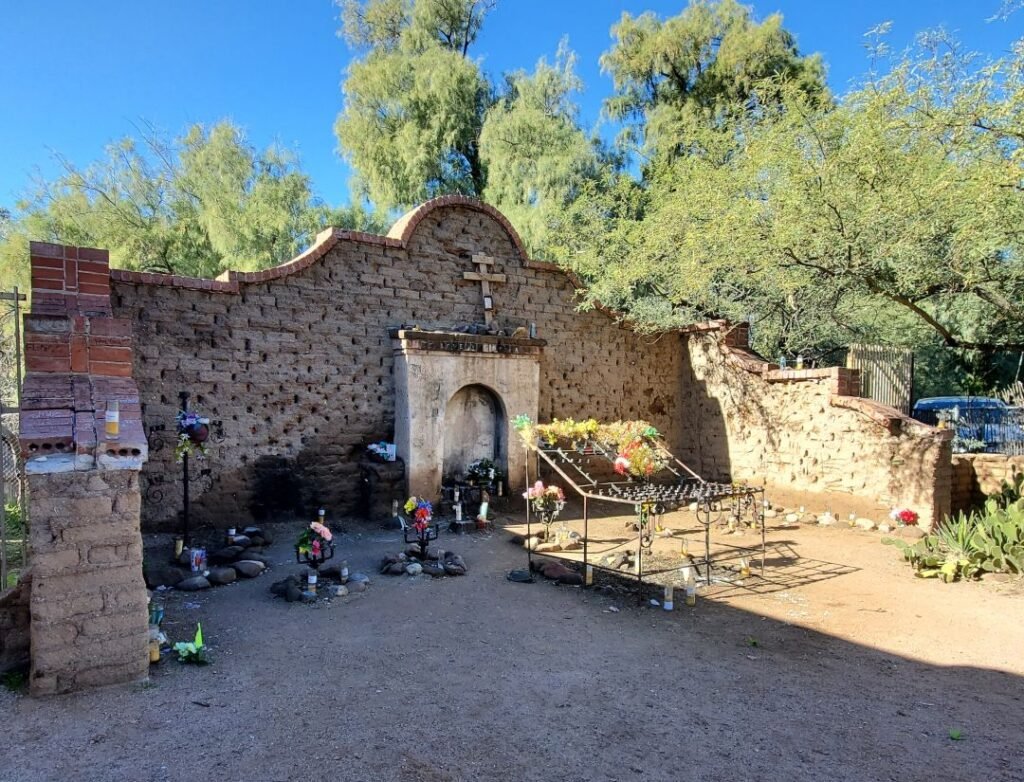
Love, lust and murder in the desert
If you don’t know the legend behind El Tiradito (The Little Castaway), here it is: Back in the 1870s a young ranch hand named Juan Oliveras became involved in an adulterous affair with his mother-in-law. But lust didn’t win. Her husband, Juan’s father-in-law, discovered the pair during a tryst, and chased poor young Juan out into the street and killed him with an axe. The Catholic Church refused to bury Oliveras in consecrated ground. He was buried right where he fell, in an unmarked grave near the site of the present-day shrine.
Tucson population in 1870 was 3220, so everyone knew everyone else and it didn’t take long for Oliveras’s burial site to become a place for locals to visit, bringing a candle and make a wish. Did the Tucsonans back then see Juan as more sympathetic than the Father-in-Law? It makes me wonder if the FIL was a not-very-popular-guy around the Old Pueblo even before the murder and there is nothing in the legend about what happened to the him after the murder. Was he tried? Exonerated? Or was the whole event ignored?
Anyway…Now you can see why I am shocked by the appearance of a cross, although that cross on the fireplace mantel is the Patriarchal Cross of the Eastern Orthodox Church not the cross of the Roman Church that refused to bury him in sacred ground. (So let’s add another ethnic/cultural layer to this folklore site!) Just keep in mind the Wishing Spot is about lust, forbidden love and a brutal public murder. And making wishes!
Juan’s gravesite to the rescue
And there is still more: In the 1960s and 1970s, a proposed federal highway threatened to demolish the shrine and surrounding historic Barrio Viejo neighborhood. Local residents and activists organized to save the site, which had become a powerful symbol of the community’s heritage and ethnic identity. In 1971 El Tiradito was placed on the National Register of Historic Places as the first property in Arizona to be listed for its traditional cultural values. This designation ultimately prevented the highway project.

And then there are the Italian notes to angels
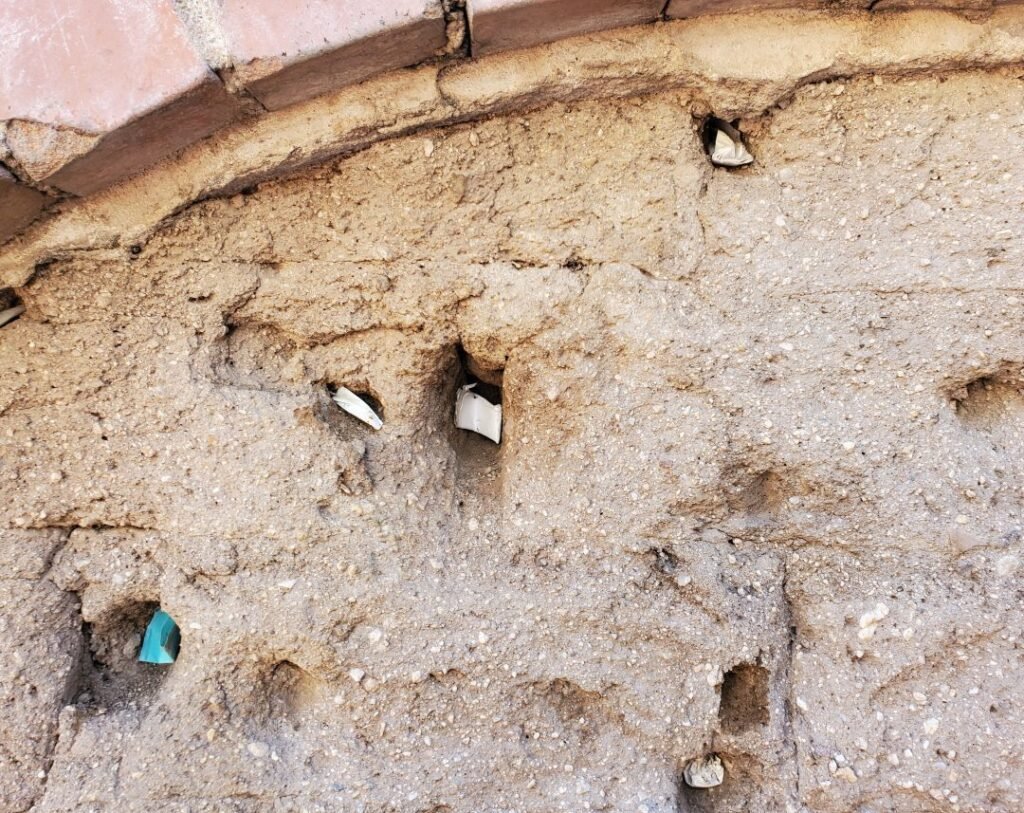
All across Europe, wherever young Italians visit, they write notes–wishes–and tuck them into cracks in gravestones in old cemeteries. As I understand it, the wishes are supposed to fly directly to heaven on the wings of angels. It appears that tradition has now taken root in El Tiradito where notes are stuffed into little holes in the adobe walls. There are also the more customary simple memorials with candles and photographs.
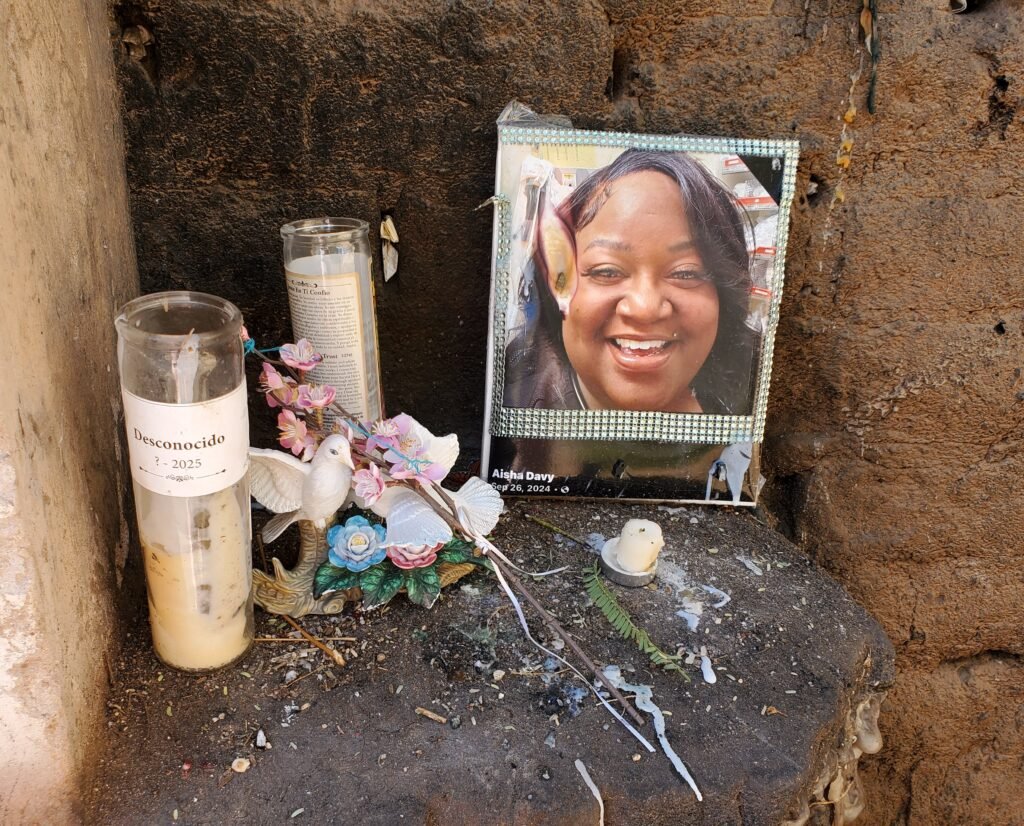
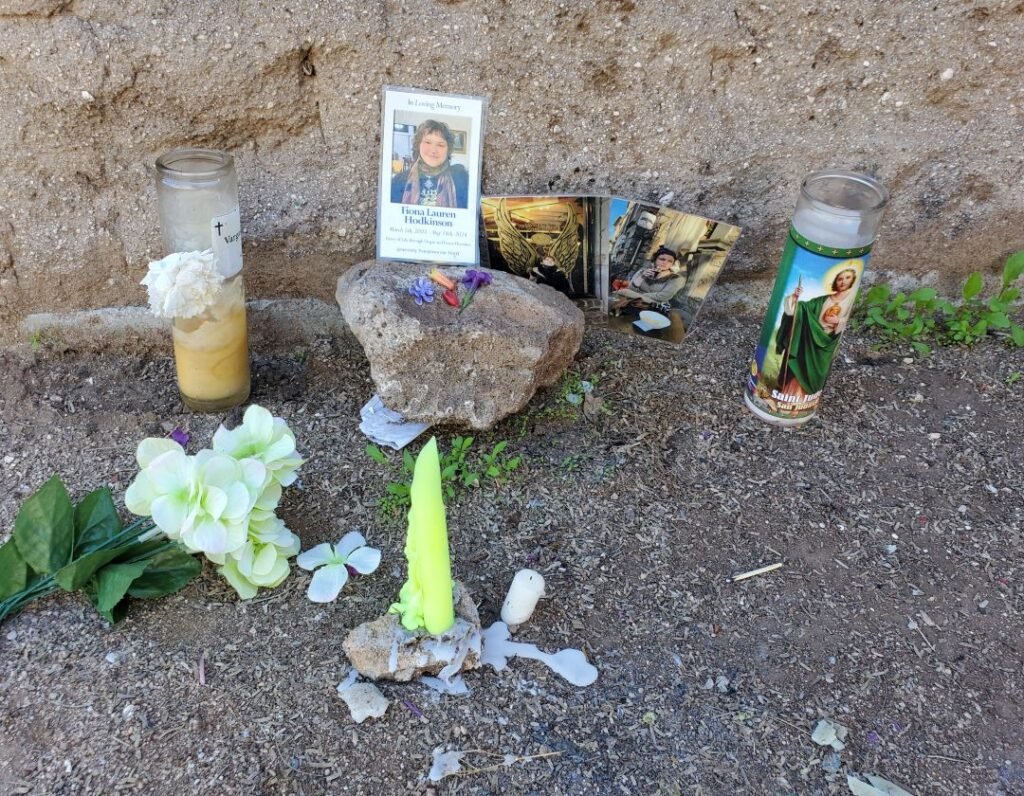
There were also many, many candles labeled “desconcido” which means the “stranger.” It is a word often used here in Southern Arizona to memorialize those whose bodies are found out in the desert, assumed to be people, names unknown, who tried to cross the harsh desert to enter the United States and died along the way–usually of thirst. Not many these days.
As for the church I intended to photograph–in the next post.
Sign up for a free subscription to I Saw it In Tucson.
Never miss out on discoveries around the city.
If you are a Tucsonan and would like a starter tree for $5, go here for more details.